
Table of Contents
The purpose of this blog post is to reach out to researchers in the humanities, social sciences, and basic sciences who are interested in marine systems in general, and tell them about an experiment we are conducting at the HIFMB.
I envision this blog post as a living record of this experiment: now I will tell you what we are trying to achieve and how we are planning to achieve that, and later I will update this post to tell you what those who joined this effort have achieved (fingers crossed).
A Personal Motivation
Why do I care about transdisciplinary work? Do I not have enough work already? Well, I do have mountains of work. That’s what it means to be a Professor in Germany. I will pretend that I didn’t hear that second question. But the first one is truly a difficult one to answer. Especially if I were to drop the boilerplate, off-the-shelf statements.
I am a computer scientist and a microbial ecologist, and I am very much invested in understanding microbes. The questions I pursue come in different levels of tractability. Most of them are quite technical and keep me busy during the day: What are the determinants of microbial succession in changing environments? How can we identify genes that enable microbes to infect another cell, survive an infection, or deal with high levels of temperature or light? Why and how do microbial genomes change? What can we learn from parts of these genomes that change fast and parts that change slow? How can we quantify processes that act on microbial populations to learn what ecological and evolutionary strategies enable microbes to respond to what kind of change?
Addressing these technical questions is relatively straightforward. After 20 years in science, I they go more or less the same. You read. Sequence. Discuss. Code. Visualize. Synthesize. Write. Fail. Write again. Fail again. Code more. Visualize more. Discuss more. Read more. Write again. Fail again. Compromise. Publish. Next. Sometimes I am so deeply invested in this process that I feel like I am floating in a dark ocean where all my senses that connect me to the rest of the world and people that I care about are somewhat dampened. For instance, I spent every waking hour of the last three weeks thinking about one thing and one thing only: a very technical question, which, in its raw form would be of interest to no more than 25 people on our 8 billion-people planet. Realistically, of that 25, probably no more than 5 live in Germany, and 80% of those people are likely in my group at the HIFMB. Which is truly a crazy realization when you really think about it. Such realizations often come to me out of the blue, and replace one fever dream with another.
When I occasionally raise my head out of the waters of my technical struggles that isolate me from everything through a form of sensory deprivation, oxygen finally rushes to my brain and inspires entirely different kinds of questions. Such as asking myself what society would think of what I am doing with the resources they have generously invested in my research. Why should anyone care what proportion of genomic variability within closely related microbes can be explained by epistatic co-selection? Or any other questions of this kind that have already dominated or will soon dominate my waking hours? This rather self-deprecating inquiry sometimes makes me go one level deeper, and question my own reasons to ask them to myself, and ultimately wonder in the darkest hours of my day whether the waters of microbiology in which I am often lost are not an ocean of intellectual grandeur as I would like to imagine, but more of a clogged sink in a gas station.
This intense dichotomy that often takes me hostage stems from the lack of any immediate links between these questions and their broader, dare I say it, societal implications. Without such connections, these technical questions are as resilient to challenges as this Twix in this 35°C office (true story: this is an extremely hot day in Oldenburg, and the Twix on my desk is now experiencing what it means to be a mixture of solid particles in its own liquid and not a chocolate bar).
Even though it is not always easy for me to remember, the following is true: I am not investing time into these technical questions for the sake of technicality. I am investing time into technical questions, because they are the only way for me to get closer to much more difficult, much less tractable, but in some ways much more meaningful ones: What can we learn from microbes about the past, present, and future of ourselves and our environments? What do the silent majority of life that originated, shaped, and maintained life on this planet say about the complex forms of life? What do those who are in perfect metabolic harmony with Earth’s chemistry tell us about the cost of consciousness to us, to our planet, and to all the other entities of life that fight against the never-ending tendency of our universe to maximize entropy? What would the infallible residents of our planet tell us, if they could, about the rapid sprouting of a stem in the tree of life that led to something new and powerful and conscious? And would it resemble in any way what we feel about inevitable AI futures today?
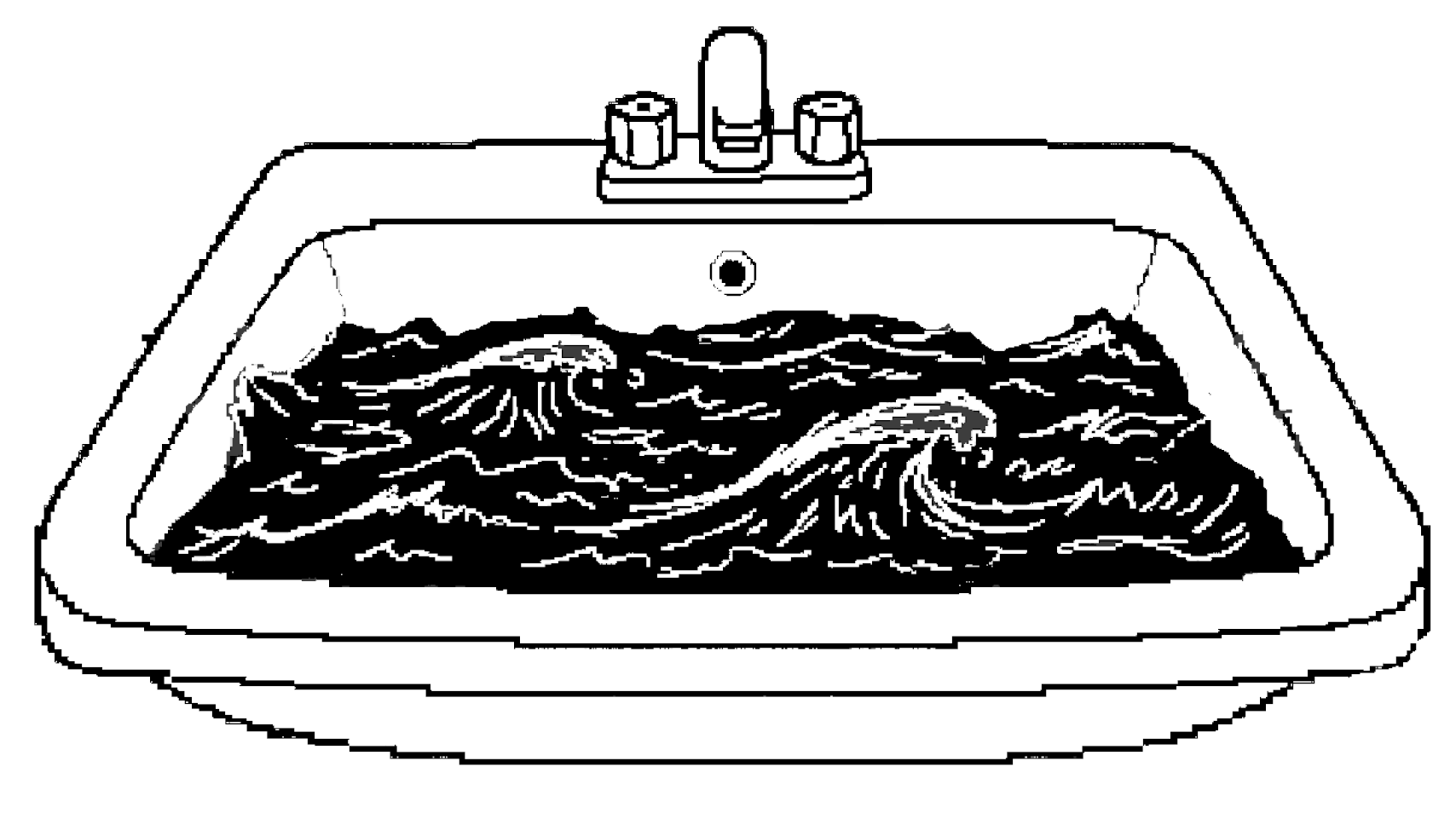
The Kurt Vonnegutesque ocean sink. By Meren. For you. Because Meren believes that everyone deserves an image after reading this much.
Well. I am wise enough (and realistically too old) to know that I will never be able to offer precise answers to these questions. Perhaps no one will. But I have learned that the act of pursuing them is itself generative as they influence and help me reframe how I think about technical work and its value. But a surprising (and even more uncomfortable) implication of asking these questions occurred to me much more recently: the questions I am most motivated by, and the ones that underpin what I do, are not the kinds of questions microbiology can answer alone. After being corrected many times by patient colleagues like Rossella Alba, Roberta Raffaetà, and others, I can think a little bit in their voices and realize that what microbes tell us about the cost of consciousness is more of a question about us than a question about microbes. And us is a domain that ethnographers of science, historians, philosophers, sociologists, linguists, political theorists, geographers, and others have been thinking a lot about for decades and have developed frameworks for exactly the kind of inquiry I am trying to contribute to while swimming in the dark and holding on to nothing but a metagenome and a few lines of code.
In the past few years I came to realize that the bridge between what microbes reveal about the world, and what that revelation means for how we govern, educate, and/or organize ourselves is not a bridge that can be built with pillars on only one side. Not being able to connect what we learn to what it means to know something is what makes one unable to distinguish an ocean from a sink. And that is precisely what makes science vulnerable to criticism in a changing world.
While I was going through these realizations, and carrying the increasingly heavy burden of the fact that I was lacking any means to connect myself with my social scientist colleagues to at least start looking for ways by which one could turn these questions into something tangible, something unexpected fell into place.
For the next call for the HIFMB Integrative Postdoc Pool (HIPP), Thilo Gross came up with a kind of proposal that appeared to fill the void in my intellectual sphere like Kurt Vonnegut fills a lonely blank page with the absurd truth of being alive, or with drawings that can easily compete with my sink above.
Thilo’s proposal was to define the next HIPP call in a way that would bring together researchers from the humanities, the social sciences, and the basic sciences from the beginning of the project so they can come up with questions that were of interest to all groups equally. I immediately recognized that this was an opportunity to test whether the bridge I had been imagining could actually be built and whether I could be a part of it.
I already had some good experiences around this call. I had many inspiring conversations with Kristian Berg, a colleague at the University of Oldenburg who studies linguistics, and together with Kim Peters and Thilo, we came up with a project to study the power of words. A linguist, a microbial ecologist, a mathematician, and a geographer walk into a bar … with their towels, to dive altogether, into unfamiliar waters, for science.
The 2027 HIPP Call: HUMAN PROGRESS
HIPP (HIFMB Integrative Postdoc Pool) is a mechanism at the HIFMB to stimulate integrative and innovative research together with other research institutes. Each year we come together to define an overarching theme, finalize individual projects proposed by PIs, and advertise the call to hire 2 to 6 postdocs to work on projects under that year’s theme as a cohort.
Just looking at the titles of some of the earlier themes will already give you a sense of what it aims to accomplish:
- The Dilemma of the Southern Ocean: Ecosystems, Sustainability and Competing Interests at the Edge of the World (2026)
- Making Sense of Tipping Points for Biodiversity: Ecosystem and Societal Perspectives (2025)
- Ecosystem Re-assembly Under Climate Change (2024)
- The Great Poleward Shift (2023)
This year’s call is one that focuses on transdisciplinary research (and brings balance to the increasingly long titles we came up with for HIPP calls in the past):
- Human Progress (2027)
You can read more about the purpose of this particular call, but here is a copy-pasta from the web page for your convenience:
The HUMAN PROGRESS project aims to advance research in the natural sciences by drawing on methods, insights, and knowledge from across the humanities and social sciences. In doing so it also offers fresh frameworks of thinking for the humanities and social sciences, and works towards an interdisciplinarity that is essential in contemporary marine sciences to tackle complex environmental problems. Postdoctoral researchers funded under this project will work together as a team and in collaboration with experts from the arts, humanities, social and natural sciences. Our criterion of success is to make a demonstrable impact on research in the natural sciences by drawing on social data, humanities approaches and ways of thinking. Along the way all disciplines involved will have to adapt, extend and to some extent automatize their methodologies, to create impact in applications while maintaining a human perspective and mindset.
The title HUMAN PROGRESS intended to provoke critical inquiry. It combines the progress-oriented thinking of the natural sciences and engineering with the word human to invite critical reflections on how progress can be achieved that takes humans into account, from the initial phrasing of problems to the impacts of eventual solutions. This includes engaging the meaning of progress, asking whom it serves, which vulnerability it generates, and how these might be challenged.
This is the timeline for HIPP applications and their evaluation:
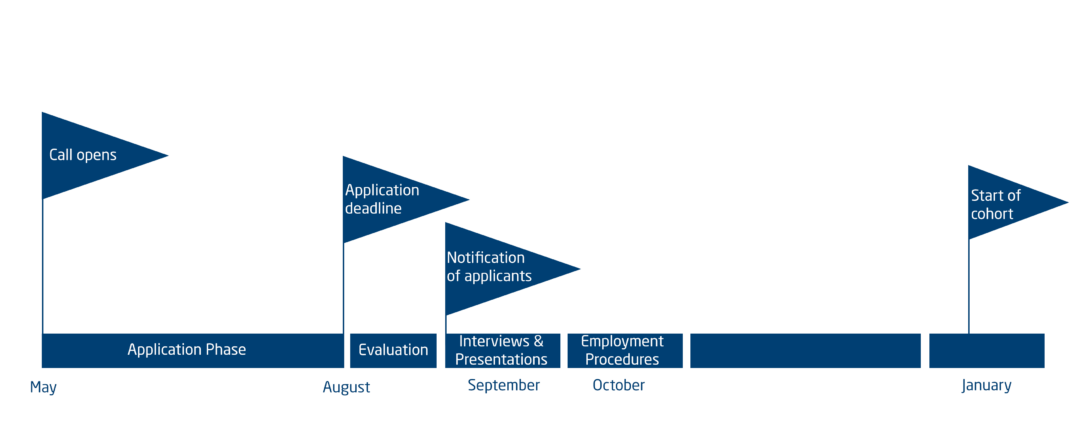
We are pretty much in the middle of the application period, and we have about one month before the application deadline.
HUMAN PROGRESS Projects
The following is my extremely brief interpretation of the positions for the readers of this blog. This link contains much more detail about each project, as well as links to pages for full job description and the official application interface.
If you have questions about any of these projects you are very much encouraged to reach out to PIs, or write to Thilo Gross at thilo.gross [at] hifmb.de. Thilo put tremendous amount of time and effort to bring this HIPP call to fruition, and is the de facto person to answer any science questions related to it.
Words and Power in Marine Biodiversity
Only 28 Ecologically and Biologically Significant marine Areas reference any biology in their name. Why? What do naming patterns reveal about power, priorities, and how scientific terms shape agendas? Beyond that, how do scientific terms and names emerge, spread, migrate into public discourse, and ultimately shape both science and society?
PIs: Kristian Berg (computational linguistics, word formation and spread), A. Murat Eren (computer science, microbial ecology), Kimberley Peters (geography, marine governance), Thilo Gross (network science, complexity theory).
Historical Observations of the Marine Environment
Structured biodiversity data spans decades, the fossil record spans millions of years with enormous gaps, and in between we have centuries of untapped historical sources in the form of writings, drawings, objects, and indigenous knowledge. Can knowledge graphs and network science turn these into usable biodiversity records, and what new methods are needed to extract meaning from multiperspective historical material?
PIs: Dagmar Freist (early modern global history, digital humanities), Thilo Gross (network science, complexity theory), Helmut Hillebrand (empirical biodiversity research, plankton ecology), Maximilian Schich (cultural data analytics, network science).
(Re-)examining Modelling
Mathematical models are black boxes understood by few, and everyone else has to accept or reject them as a whole, which leads to erosion of public trust in science. Can a philosophical reexamination of how models produce knowledge create conceptual tools that let people meaningfully question models and their assumptions without needing to understand the mathematics?
PIs: Rossella Alba (marine policy, politics of modelling), Thilo Gross (network science, complexity theory), Mark Siebel (theoretical philosophy, epistemology, philosophy of science).
Human Decisions in Environmental Systems
In ecological models, humans are either absent or treated as just another predator, where a fisherman becomes indistinguishable from a shark, ignoring decades of knowledge on human behavior across psychology, sociology, and economics. How should human decision-making actually be represented in ecological models, and what changes when it is?
PIs: Thilo Gross (network science, complexity theory), Barbara Moschner (psychology, motivation), Marius Sältzer (computational social science, political communication).
Science Narratives
Even in abstract mathematics, the products of research are human-readable narratives, which sorely lack in environmental sciences as most publications restate and reinforce existing narratives which turns them into almost dogmatic phrases. What makes a scientific narrative successful, how do new ones emerge and reshape entire fields, and are there important questions that go unasked because they don’t make for compelling stories?
PIs: Sina Farzin (sociological theory, narratives in academic and literary texts), Thilo Gross (network science, complexity theory), Anton Kirchhofer (English literature, science and narrative).
Final Words and TL;DR
I have no idea how this effort will unfold. Perhaps that is precisely the point of it. I know that every single project is put together by those who are very motivated to work together, and that in itself is extremely exciting if you look at the diversity of backgrounds that PIs represent.
As I promised at the beginning, I intend to document the outcome of each project towards their completion, and tell you honestly if we found ourselves at the shores of an ocean, or next to a sink behind a gas station.
TL;DR:
We have advertised five post-doc positions at the humanities / social science / basic science interface, please tell people about them, and/or consider applying:
https://hifmb.de/institute/hipp/human-progress/
The five projects in this call are,
- Words and Power in Marine Biodiversity
- Historical Observations of the Marine Environment
- (Re-)examining Modelling
- Human Decisions in Environmental Systems
- Science Narratives
Application deadline is July 20th, 2026.
Please spread the word by sharing the link above :)